
Most people think of mold as something that appears on a wall, floor, or shower tile. But one of the most common — and most hidden — areas for mold growth is above your head. The photo above shows exactly what it looks like when a remediation project moves into the ceiling phase. It’s not just a little patch cleanup. It’s controlled demolition, containment, and precision work to make sure every trace of mold is safely removed before rebuilding begins.
At Quest Mold Remediation & Rebuild, this stage is where restoration meets expertise. It’s not glamorous — but it’s the difference between covering up a problem and solving it for good.
Why Ceiling Mold Is Easy to Miss
Mold in ceilings often goes unnoticed for months or even years. The most common culprits are roof leaks, condensation from attic HVAC systems, or slow plumbing leaks running through overhead pipes. Moisture collects on the wood framing, insulation, and drywall, and because it’s above eye level, homeowners don’t realize there’s a problem until discoloration, sagging, or odors appear.
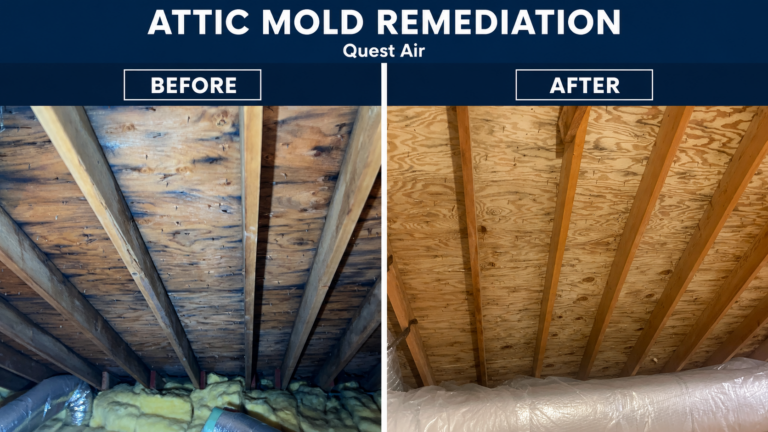
By the time it’s visible, the damage is usually more extensive than expected. Moisture trapped in insulation and rafters allows mold to spread across large areas — often requiring removal of drywall, insulation, and even sections of ductwork to fully eliminate contamination.
That’s exactly what’s happening in the photo. You can see our technician preparing a sealed containment area while the ceiling cavity above is completely exposed. The trusses, pipes, and ductwork are visible, allowing our team to reach every hidden surface where mold can grow.
The Importance of Containment
Containment is the first and most critical step in mold remediation. Before any removal begins, we isolate the affected area using heavy plastic sheeting and negative air machines. This ensures that mold spores disturbed during cleanup don’t migrate into clean parts of the home.
In this project, our technician is seen sealing the walls and doorways, creating a fully enclosed space. Behind that plastic, the air pressure is controlled so any airborne spores are pulled out through HEPA filtration. It’s a process that protects not just your home — but your health.
Without proper containment, mold remediation can actually make things worse by spreading microscopic spores throughout the building. That’s why professional intervention is so important when ceilings, attics, or HVAC systems are involved.

Step by Step: What Happens Next
Once containment is secure, our team carefully removes all affected materials — typically drywall, insulation, and any visibly damaged wood. Each piece is bagged and disposed of safely. Then we move into cleaning and treatment, applying antimicrobial solutions to all exposed framing and running air scrubbers to remove airborne spores.
Next, we perform a dry-out phase, ensuring that moisture levels in the wood, air, and insulation are safe before reconstruction. Only after full clearance testing do we start rebuilding. That means new drywall, repainting, and ensuring all components (electrical, HVAC, plumbing) are properly reinstalled.
The result: a ceiling that not only looks new but is structurally sound and protected against future mold growth.
Preventing Ceiling Mold in the Future
Once your home has gone through professional remediation, prevention becomes key. Here are a few ways homeowners can reduce the risk of future ceiling mold:
-
Inspect the attic regularly. Look for roof leaks, wet insulation, or condensation around ducts.
-
Maintain ventilation. Ensure attic fans, soffit vents, and exhaust systems are clear and functioning properly.
-
Monitor humidity. Keep indoor humidity below 50% using dehumidifiers in high-moisture areas.
-
Check plumbing lines. Water supply and drain pipes running through ceilings can develop slow leaks over time.
-
Schedule routine inspections. Early detection is the best defense — especially after storms or roof repairs.
When we rebuild, we also take these preventive measures seriously. Our team uses mold-resistant drywall, proper vapor barriers, and high-quality sealants to strengthen your home’s protection from the inside out.
Why Professional Remediation Matters
DIY solutions can only go so far, especially when mold grows above the ceiling line. Without professional testing and treatment, unseen spores can continue to circulate through your HVAC system, triggering allergies, respiratory issues, and lingering odors.
Quest Mold Remediation & Rebuild doesn’t just patch the visible damage — we address the source. We inspect every layer, treat every surface, and rebuild the space with long-term safety in mind. That’s the peace of mind every homeowner deserves.
Service Areas
Quest Mold Remediation & Rebuild proudly serves homeowners across New Jersey and Eastern Pennsylvania, including:
Old Bridge, Tinton Falls, Matawan, Morrisville (PA), Robbinsville, East Windsor, Clifton, Middletown, Flemington, Somerset, Lumberville, Yardley, Monroe Township, Hamilton, Pennington, and the surrounding communities.
If you suspect mold in your attic or ceiling, don’t wait until it spreads. Call Quest today for a full inspection and rebuild plan — and let our team bring your home back to a clean, safe, and beautiful state.