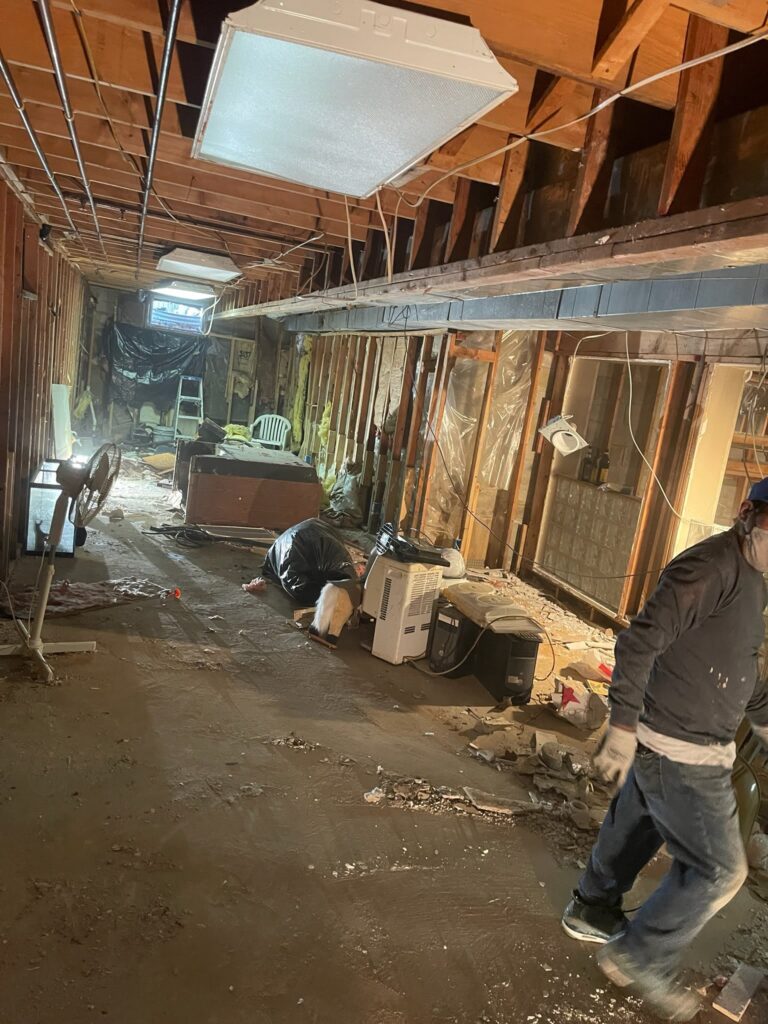
When people see water damage, the first instinct is usually the same: dry it out and move on.
But in many cases, especially like the situation shown here, that approach simply doesn’t work.
What you’re looking at is not unnecessary destruction. It’s controlled, intentional demolition — and it’s one of the most important steps in doing the job right.
The Problem Isn’t Just What You See
Water has a way of spreading far beyond the obvious.
Even if the surface looks manageable, moisture is often hiding inside:
- Drywall
- Insulation
- Wood framing
- Flooring layers
These materials act like sponges. Once they absorb water, they don’t just dry evenly on their own. They trap moisture, creating the perfect conditions for mold growth and structural deterioration.
That’s why leaving materials in place can actually make things worse.
Drying Alone Isn’t Enough
A common question homeowners ask is:
“Can’t we just dry everything out with fans?”
In minor cases, maybe. But in situations like this, no.
When water has penetrated building materials:
- Drywall begins to break down
- Insulation loses its effectiveness
- Wood can warp or rot
- Hidden moisture lingers behind surfaces
If you try to dry over damaged materials, you’re essentially sealing in the problem.
Demolition Opens Everything Up
The purpose of demolition is simple: expose everything that’s been affected.
By removing damaged materials, you:
- Allow proper airflow throughout the space
- Identify the full extent of the damage
- Eliminate materials that can’t be salvaged
- Create access for thorough drying and treatment
It may look extreme, but it’s actually the most controlled and precise way to prevent long-term issues.
Preventing Mold Starts Here
One of the biggest risks after water damage is mold, and it doesn’t take long to develop.
In the right conditions, mold can begin forming in as little as 24 to 48 hours.
Demolition helps stop that process by:
- Removing moisture-trapping materials
- Reducing humidity pockets
- Allowing dehumidifiers and air movers to work effectively
Skipping this step is one of the most common reasons water damage problems come back later.
It’s About Doing It Once — The Right Way
No one wants to see their walls opened up. It feels like things are getting worse before they get better.
But proper demolition is what ensures:
- The structure is fully dry
- Repairs will last
- There are no hidden issues left behind
Cutting corners at this stage can lead to repeat damage, higher costs, and bigger problems down the road.
The Reality Behind Restoration
This phase isn’t the clean, finished result — it’s the groundwork.
It’s where the real work happens:
- Opening walls
- Removing what can’t be saved
- Preparing the space for a full recovery
It may not look pretty, but it’s exactly what needs to be done to rebuild safely and correctly.
Final Thought
Demolition isn’t about tearing things apart. It’s about making sure nothing is left behind that could cause problems later.
If water damage is handled the right way from the start, the rebuild is stronger, safer, and built to last.