Rebuilding from the Ground Up: Flooring Removal and Mold Prevention
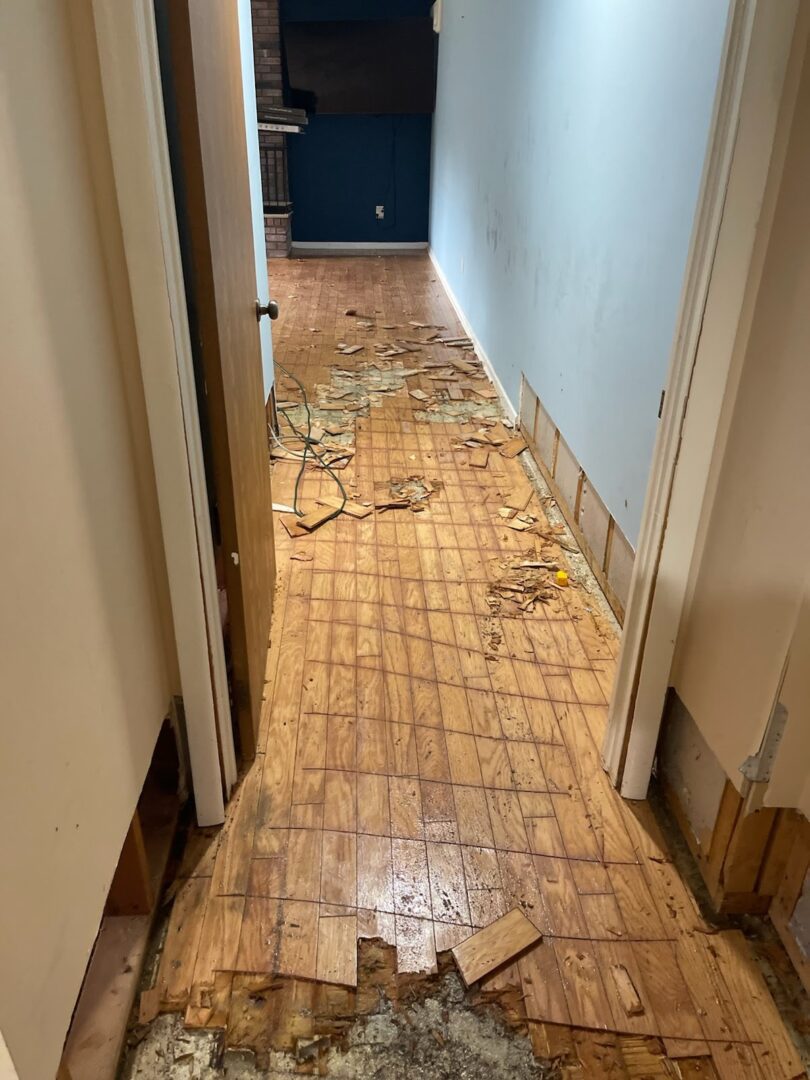
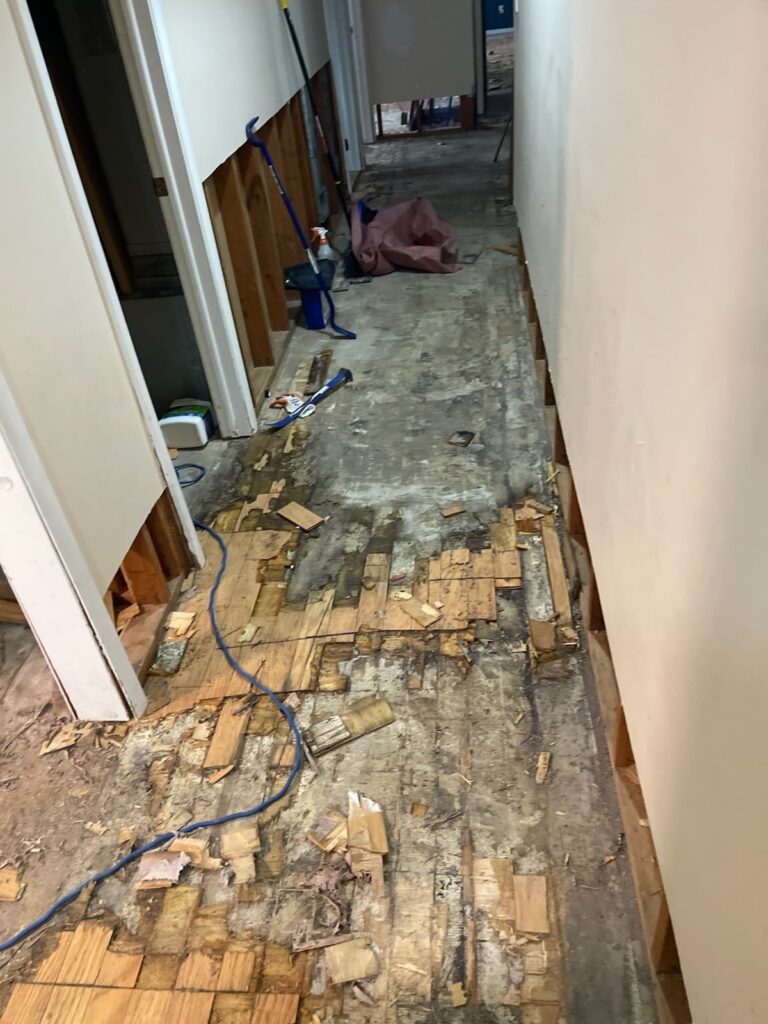
When water damage affects a home, the cleanup is only the first step. The real work happens during the rebuild process, when damaged materials are removed, hidden moisture is addressed, and the home is prepared for safe restoration. The photos here capture a crucial stage: flooring removal and mold prevention.
At first glance, wood flooring might not look too bad. But what lies beneath often tells a very different story. Water has a way of seeping into every crack, soaking through adhesives, and getting trapped between the subfloor and the finished flooring. Once trapped, that moisture doesn’t just disappear. It lingers, creating the perfect conditions for mold to take hold. That’s why contractors rely on heavy-duty equipment, like the professional-grade floor stripper shown in these photos, to remove every inch of damaged flooring. The process is noisy, messy, and labor-intensive, but it’s absolutely necessary to make sure the structure can dry out completely.
You may also notice that the walls in these rooms have been cut several inches above the floor. This practice, called a “flood cut,” is another essential part of mold prevention. Drywall can act like a sponge, drawing water upward. By cutting away the lower portion, crews can access wall cavities, remove damp insulation, and apply drying equipment. Without this step, mold could grow unnoticed behind walls, spreading silently until it becomes a much bigger problem.
Mold is more than just a nuisance. Left untreated, it can compromise structural integrity and create serious health risks. Respiratory irritation, persistent coughing, headaches, and allergy-like symptoms are just some of the issues mold exposure can cause. For people with asthma or weakened immune systems, the risks are even greater. That’s why rebuilding after water damage is never just about putting materials back in place — it’s about ensuring the home is safe to live in.
The flooring removal process may leave a home looking worse before it looks better. Dust, broken wood pieces, and exposed subfloors can make the space feel like a construction zone. But this is actually progress. Every piece of damaged material removed is one less place for mold to hide. Once the structure has been fully dried and treated with antimicrobial solutions, homeowners can have confidence that the new floors and walls will be built on a clean, solid foundation.
In the end, this stage of the rebuild is about peace of mind. By addressing the unseen dangers of water damage — especially mold — contractors make sure the home isn’t just beautiful when finished, but also safe and healthy for the people who live there.
If your home has suffered from flooding or water damage, don’t be tempted to cover up the problem with quick fixes. Professional remediation and rebuild services are the key to protecting both your property and your health. These photos may show the messy side of the work, but they also show the dedication to doing the job right — from the ground up.