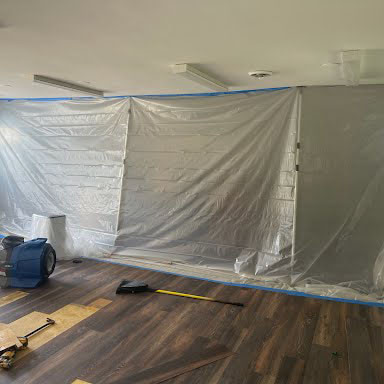
Most homeowners picture mold remediation as the whole job: the containment sheeting goes up, the mold comes out, the crew packs up and leaves. In reality, that’s the first half. When mold has gone far enough to require professional remediation, removing it usually means removing some of the material it was growing on — and that leaves a room that is clean but unfinished.
The stage that follows has a few names. Contractors call it the rebuild, the build-back, or the build-out. Whatever it’s called, it’s the work that takes a space from safe to usable again. Here’s what that stage involves, why it’s often necessary, and what to expect before you can put the room back into normal use.
Why remediation usually means removal
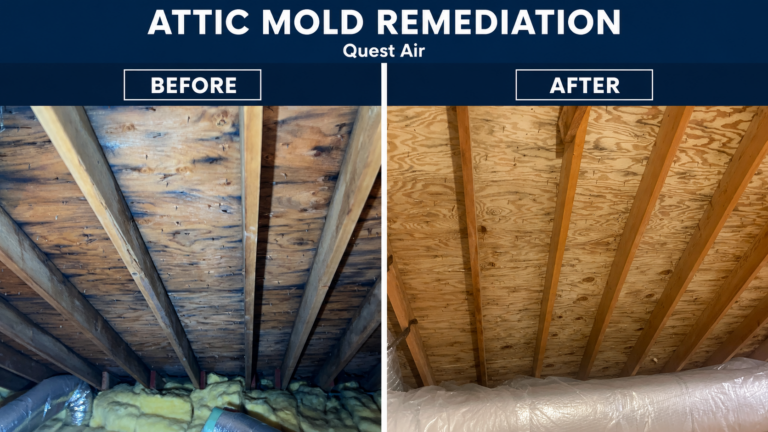
Mold isn’t a surface stain you can simply wipe away. It puts down roots — hyphae — into whatever porous material it’s growing on. On drywall, insulation, carpet padding, ceiling tile, or bare wood framing, those roots go beneath the surface, which is why cleaning alone often isn’t enough.
Industry guidance for porous materials that are visibly colonized is generally removal rather than cleaning, because there’s no reliable way to confirm that every root structure inside the material is dead. Hard, non-porous surfaces such as tile, metal, glass, and sealed framing are a different story — those can usually be cleaned and kept.
That distinction is what determines how much rebuilding you’ll need. A small area of surface growth on a painted, non-porous surface may need no reconstruction at all. Mold inside a wall cavity, in insulation, or under flooring generally does.
Remediation and reconstruction are two different stages
This trips up a lot of homeowners, so it’s worth stating plainly: remediation and reconstruction are separate phases with separate goals.
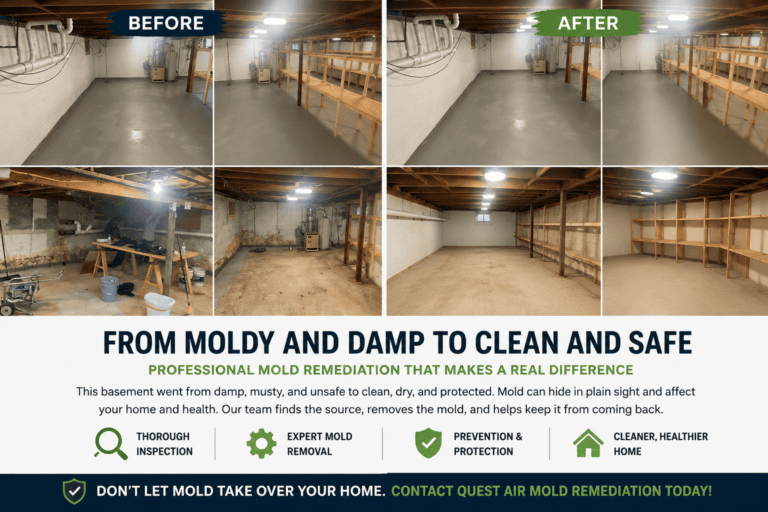
Remediation is a containment and removal process. Its goal is to eliminate the mold and stop it spreading. It typically involves sealing the work area, controlling airflow so spores aren’t pushed into clean parts of the home, removing affected materials, cleaning what remains, and drying the space thoroughly. (For a closer look at that stage on its own, see what happens during a mold remediation appointment.)
Reconstruction, or build-back, is ordinary construction work. Its goal is to replace what remediation had to remove and return the room to the condition it was in before.
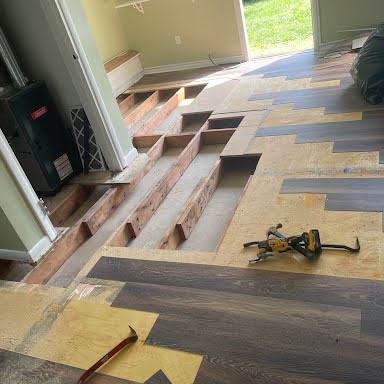
The gap between them matters. A room can be entirely free of mold and still be unlivable — no drywall, no insulation, subfloor exposed. Passing remediation doesn’t mean the room is finished; it means it’s ready to be rebuilt.
What happens between the two: drying and verification
There’s an important step in the middle that’s easy to overlook.
Before anything gets closed back up, the affected area needs to be dry — not surface-dry, but dry through the material. Moisture meters and, on larger jobs, drying equipment are used to confirm this. Rebuilding over material that still holds moisture is one of the more common ways mold returns, because sealing damp material behind new drywall creates exactly the dark, humid, undisturbed conditions mold prefers.
Many projects also include post-remediation verification — sometimes called a clearance test. This is an independent check, often by a third-party industrial hygienist, that the work area meets the agreed standard before reconstruction begins. It may involve a visual inspection, moisture readings, and air or surface sampling compared against an unaffected part of the building.
Whether clearance testing is required depends on the size and circumstances of the job. It’s more common on larger losses, insurance claims, real estate transactions, and commercial or multi-family properties. On a small residential job it may not be necessary. If you’re unsure whether your project should include one, it’s a reasonable question to ask before the rebuild starts — because once new drywall is up, re-checking what’s behind it is a great deal harder.
What typically needs to be rebuilt
The specifics vary with what was removed, but the materials most often involved are:
- Drywall. The most commonly removed material, because it’s porous and sits directly over the wall cavities where moisture problems develop.
- Insulation. Fiberglass and cellulose both hold moisture and are difficult to clean effectively, so affected insulation is usually replaced rather than dried.
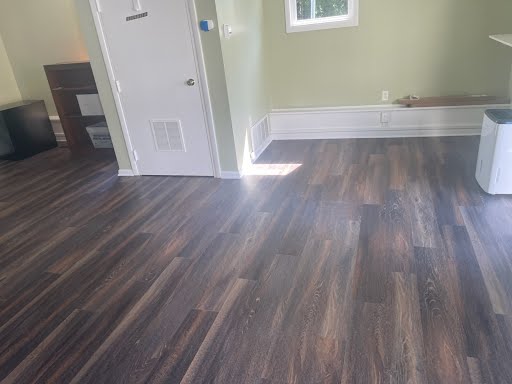
- Flooring. Carpet and padding are frequently removed; so are laminate and engineered products that have swelled. Tile and sealed concrete more often survive.
- Ceilings. Especially where the moisture came from above — a roof leak, a failed supply line, or an overflowing fixture on the floor above.
- Trim and molding. Baseboards and casings usually have to come off to access the wall behind them, and are often damaged in the process.
- Paint and finishes. New drywall needs taping, priming, and painting to match the rest of the room.

What to expect during the rebuild
A few things are worth knowing before this stage starts.
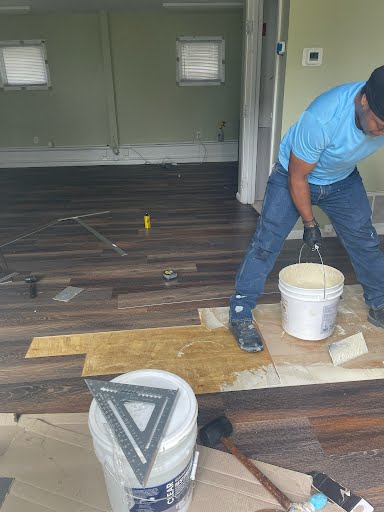
It takes longer than the removal did. Remediation on a contained area is often measured in days. Reconstruction involves multiple trades, materials that need ordering, and finish work that has to cure — drywall compound and floor leveling compound both need drying time before the next step.
The room stays out of use. Even after the mold is gone, an area with exposed framing or wet compound isn’t somewhere to store furniture or let children and pets wander.
Matching existing finishes isn’t always possible. Flooring and paint colors get discontinued, so where a room connects visually to another space you may face a choice between an approximate match and extending the new finish further than strictly necessary.
Ask who is doing what. Some companies handle remediation and rebuild in-house; others hand off to a separate contractor. Neither is wrong, but knowing up front avoids a gap where the mold is gone and nobody owns putting the room back.
Why proper restoration matters
It’s tempting to treat the rebuild as cosmetic — the real problem is solved, this is just tidying up. That’s not quite right.
Rebuilding is the last opportunity to address whatever caused the problem, because the wall is still open. If the source was a slow plumbing leak, poor drainage, a ventilation gap, or missing vapor control, this is the cheapest moment to fix it. Closing the wall without addressing the cause leaves the same conditions in place, now hidden again.
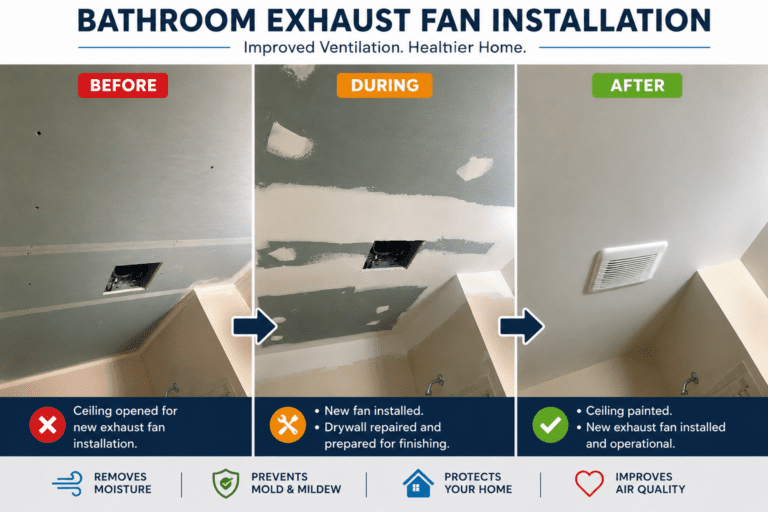
Done carelessly, restoration can also create new problems: insulation packed into a cavity that still holds moisture, or a bathroom rebuilt without addressing the exhaust fan that contributed in the first place.
The short version
Mold remediation removes the problem. Reconstruction returns the space. Between them sits a drying and verification step that determines whether the repair holds.
If you’re planning work, the questions worth asking up front are: what will be removed, how will we confirm it’s dry, will there be a clearance check, who is rebuilding, and what is being done about the original moisture source.
Quest Air handles mold inspection, testing, and remediation across New Jersey and Pennsylvania, and depending on the project can assist with restoring affected areas once remediation is complete — including drywall, insulation, trim, ceilings, flooring, and painting. If you’d like to talk through what a project in your home would involve, get in touch.